WHY we need to democratize AI
AI is not inherently good or bad; but the structural conditions under which AI is deployed can be. In the current AI market, there is a powerful oligopoly: a concentration of wealth, power, and information (in short, benefits) associated with innovative AI deployment amongst just a handful of big tech companies, many of which are clustered in specific geopolitical contexts like the United States, and which have unmatched computational capabilities—that is, the kinds of vast material and technological resources required to train and deploy next-generation generative AI tools. Meanwhile, risks associated with innovative AI deployment are currently not similarly concentrated. Instead, they are dispersed widely in society.
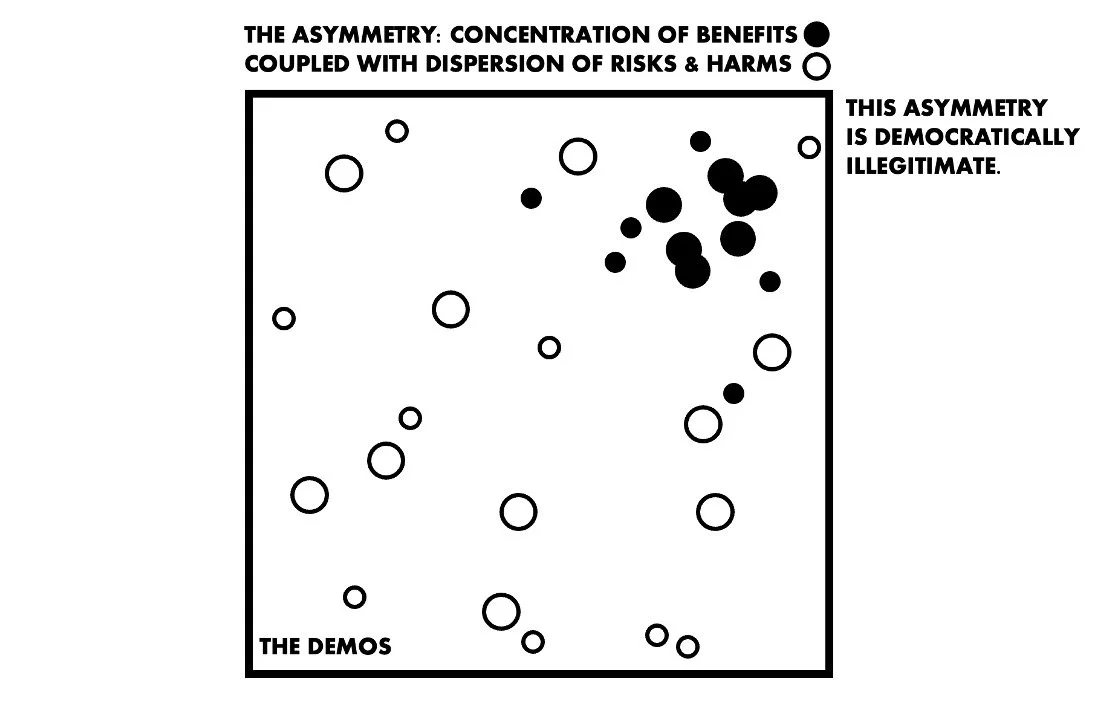
What’s the problem here?
The asymmetry creates a democratic legitimacy deficit.
After all, the asymmetry is a direct result of undemocratic decision-making: AI deployers usually have de facto unilateral decision powers allowing them to deploy new tools where, when, and how they want — without democratic authorization and oversight. The continued presence of the asymmetry sets back the interests of the members of the demos: it privatizes benefits while collectivizing risks. To make matters worse, asymmetries of this kind can erode democratic procedures and institutions: deep mutual dependencies between political and business spheres, coupled with extreme wealth inequalities, can create deep obstacles for citizens to get their voices hear. Finally, antidemocratic ideologies popularized by Big Tech leaders risk undermining and demoralizing civic actors who aim to co-shape AI’s future place in our society.
In a nutshell, any oligopoly risks tipping into an oligarchy if left unchecked.
At the moment, geopolitical tensions drive accelerated AI deployment at the cost of public accountability. In many regions, major regulatory gaps persist in the AI space, and even where legal guardrails do exist, enforcement is often slow and timid, with public officials deferring to corporate preferences and influence in many cases. Meanwhile, ‘regular’ citizens are often treated as necessarily passive, necessarily uninformed recipients of technological innovation, rather than as active stakeholders and decision-makers.
A better approach to AI innovation is one that turns citizens into co-authors and co-owners of our shared future.
How to democratize ai
First, let’s bust some popular myths about what democratizing AI ostensibly means: reductive and misleading narratives about democracy and AI are everywhere right now. Click here for a how-to guide on how not to think about the goal democratizing AI, published as a NeurIPS’25 position paper.
now, let’s get into some concrete. strategies and solutions, grounded in political philosophy.
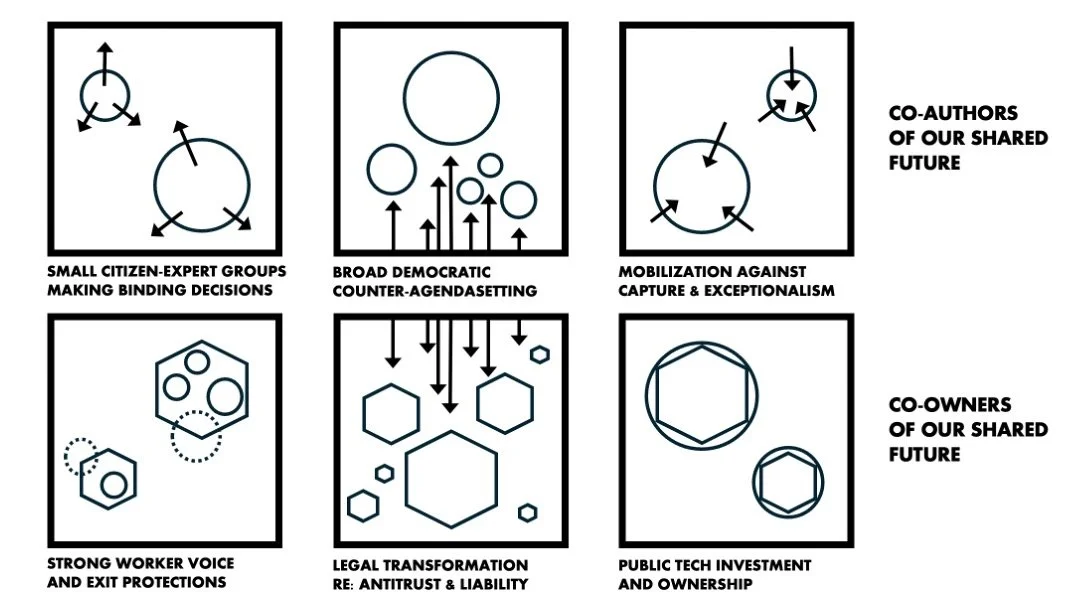
the ai democratization playbook: a growing toolbox
Watch this space as we share more detailed resources on each one of these AI democratization strategies.